
How to Get Washtenaw Court Records
Start with the court named on the case. Circuit-level files sit with the Washtenaw County Trial Court and its Court Services functions, while Probate Court and each district court maintain their own records. For public case information, MiCOURT Case Search is the statewide tool. Once a case turns up, ask the court of record for the actual item: the case history, a copy, a certification, a transcript, or media. The county's request route also steers searchers toward 14A docket and calendar links. One caution. MiFILE handles e-filing, and it is not a substitute for a public record request.
- Identify the Washtenaw court, case number if known, party name in the case, document or proceeding, and an approximate date range.
- Check the Washtenaw public case search or court calendar when a case number or event must first be located.
- Ask the Washtenaw court of record about inspection, a plain copy, a certified copy, a transcript, or permitted proceeding media.
- Use the Washtenaw court’s stated channel: Court Services or the applicable records counter in person, its phone line, its official mailing address, or its court-specific request process.
- Ask about Washtenaw identification, written-request, payment, and delivery requirements before sending material or traveling to a counter.
Michigan rules require a way to reach public electronic court records. The details, though, are set locally. Washtenaw terminal availability and the inspection steps here are decided by the court itself. A public online display may leave out the record you need. In that case, ask the Washtenaw clerk about the public-access terminal. Any mail request must go to the address of the Washtenaw court holding the file. Keep this in mind. The Trial Court and 15th District Court mailing addresses are not interchangeable.
Washtenaw Court Record Search Routes
The county's court-records request page keeps three things apart: case lookup, docket and calendar links, and the channel for requesting documents. That split matters more than it looks. A case search can identify a case history. Yet the public display may show no document image, or only an older file. So when something is missing, restricted, or incomplete online, contact the court that took the action. Don't assume the record never existed.
The request page lays out the routing plainly. It starts with the proper court. Then it moves to the case. Finally, it ends with the document request itself, which the official page spells out step by step.
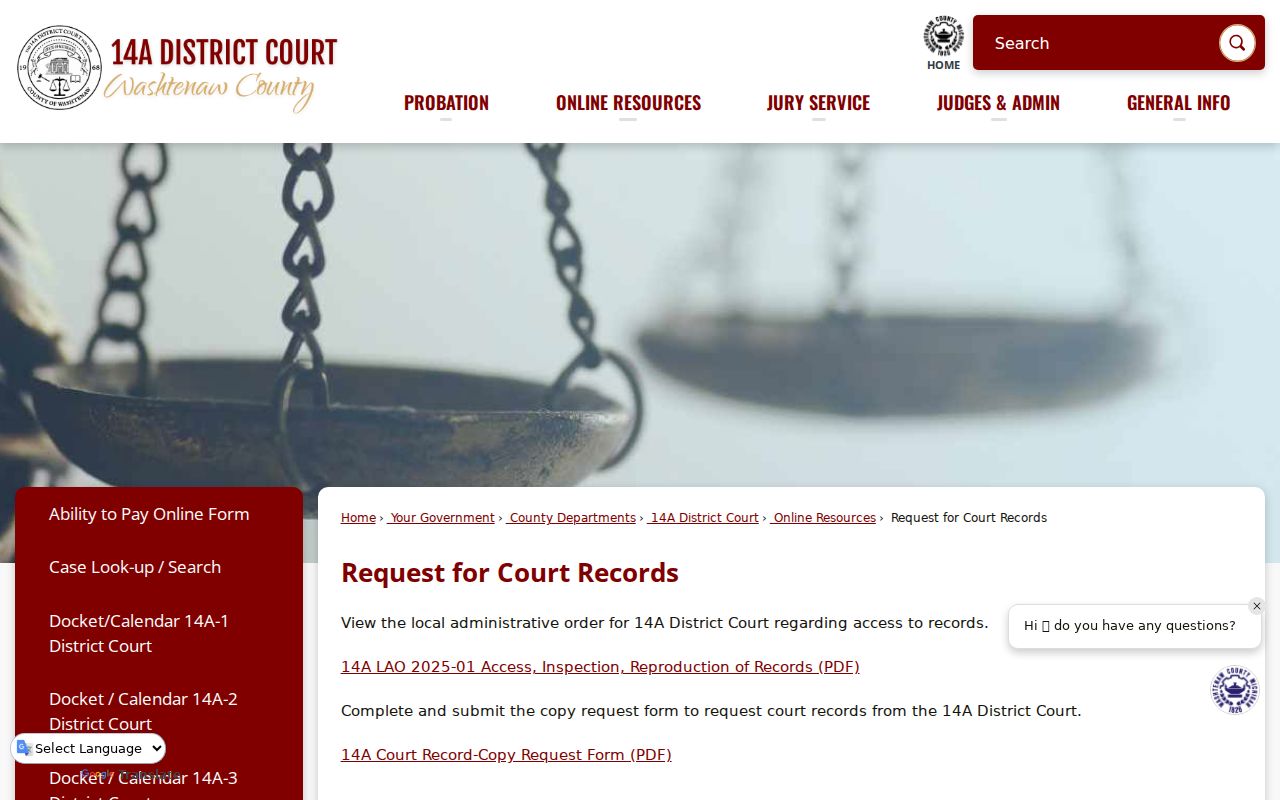
The practical sequence is simple. Find the case first. Then ask the Washtenaw office holding the file for the specific record you need, rather than trusting a search result alone.
Types of Washtenaw Court Records
A Washtenaw court record can take several forms. It may be a case-history index. It may also be a filed document, or a separately managed record of a proceeding. The form drives everything else. It determines both which office holds the record and how the request should be made. Public availability differs too, depending on the case type and the material requested.
- Complaints, petitions, answers, motions, affidavits, and proofs of service in a case file.
- Orders, judgments, notices, and other court directives or event papers.
- Registers of actions or case histories that list filings, settings, and orders by date.
- Probate records such as estate, guardianship, conservatorship, and will-related files.
- Transcripts, exhibits, and proceeding media, which may have separate access, fee, or permission rules.
Public Washtenaw docket access has limits. Not every item is imaged or open. A Washtenaw filing may need a separate clerk request, may carry a copy charge, or may be nonpublic entirely.
Washtenaw Court Records by Court
Washtenaw County does not run one undivided court file. The court that handled the case is the best records contact for it. For Trial Court matters, Washtenaw Court Services serves as the public-records custodian. Even so, it does not replace a district or probate records counter when the file is held there. Match your request to the court that actually has the papers.
| Court custodian | Records commonly held | Request starting point |
|---|---|---|
| Washtenaw County Trial Court / 22nd Circuit | Felony, circuit civil, domestic relations, family, juvenile, and related Trial Court matters. | Court Services and the Trial Court records process. |
| Probate Court | Estates, guardianships, conservatorships, mental-health matters, and wills for safekeeping. | Probate records staff. |
| 14A, 14B, and 15th District Courts | Misdemeanors, traffic and civil infractions, small claims, and other district matters. | The particular district court’s clerk or records counter. |
Note: A county general-government records office is not the default custodian for a court case file or case-history request. Ask the court that handled the case.
What a Washtenaw Court Record Contains
A case file and a docket do different jobs in Washtenaw. The register of actions, also called a case history, is a chronological index. It shows that a motion, notice, order, or judgment was entered, but the operative document may sit elsewhere, unscanned, or restricted. When exact terms matter, read the underlying order itself.
| Case number | The court-assigned identifier; use the complete number, court, case type, and year when available. |
|---|---|
| Case history | A dated register of filings, settings, events, and orders. It may not include every document image. |
| Filed papers | Initiating papers, responses, motions, affidavits, and proofs of service, subject to access limits. |
| Orders and judgments | Signed court rulings or final decisions; the actual document controls its terms. |
| Media and exhibits | Material that may require a separate request, fee, permission, or court-specific handling. |
Washtenaw Court Record Indexes
MiCOURT and the legacy Odyssey context are good entry points for public case information. Neither promises a complete electronic case file. MiCOURT leaves out many protected case categories. Older, sealed, nonpublic, and court-specific records can fall outside the public display too. A missing document image may simply mean the clerk holds it in another format. It does not mean the docket entry was wrong.
A Washtenaw case search may identify a docket event. If so, put that exact event name and date into your records request. It helps the clerk tell apart a case-history printout from the actual motion, order, transcript, or proceeding record. A Washtenaw County case search can supply the locating details before any document request goes in.
Washtenaw Court Records Certified Copies and Fees
Copy types are not the same thing. A plain copy just reproduces the record. A certified copy adds the clerk's authentication, matched to the use the receiving party requires. An exemplified copy is a further authentication format. Ask which form is required before ordering, since certified and exemplified copies are not interchangeable.
| Item | Amount |
|---|---|
| Plain or normal copy | $2 per page |
| Certified copy | $10 plus $1 per page |
| Exemplified copy | $10 plus $1 per page |
Posted Washtenaw amounts cover copies. Charges for media, postage, or a court-specific process should be confirmed with the records custodian. The certification and exemplification framework comes from MCL 600.2546.
Washtenaw County Trial Court Court Services
101 E Huron Street, Room 1109
Ann Arbor, MI 48104
734-222-3270
Monday through Friday, 8:00 a.m. to 4:30 p.m.
Washtenaw Court Record Media Limits
The 15th District Court forms index bundles media and records materials with copy-request resources. Its proceeding-DVD form covers one thing only. That thing is a copy of a court proceeding. It is not a docket-history printout, nor a general certified-copy request. Use that form with the court's current instructions for this distinct kind of ask.
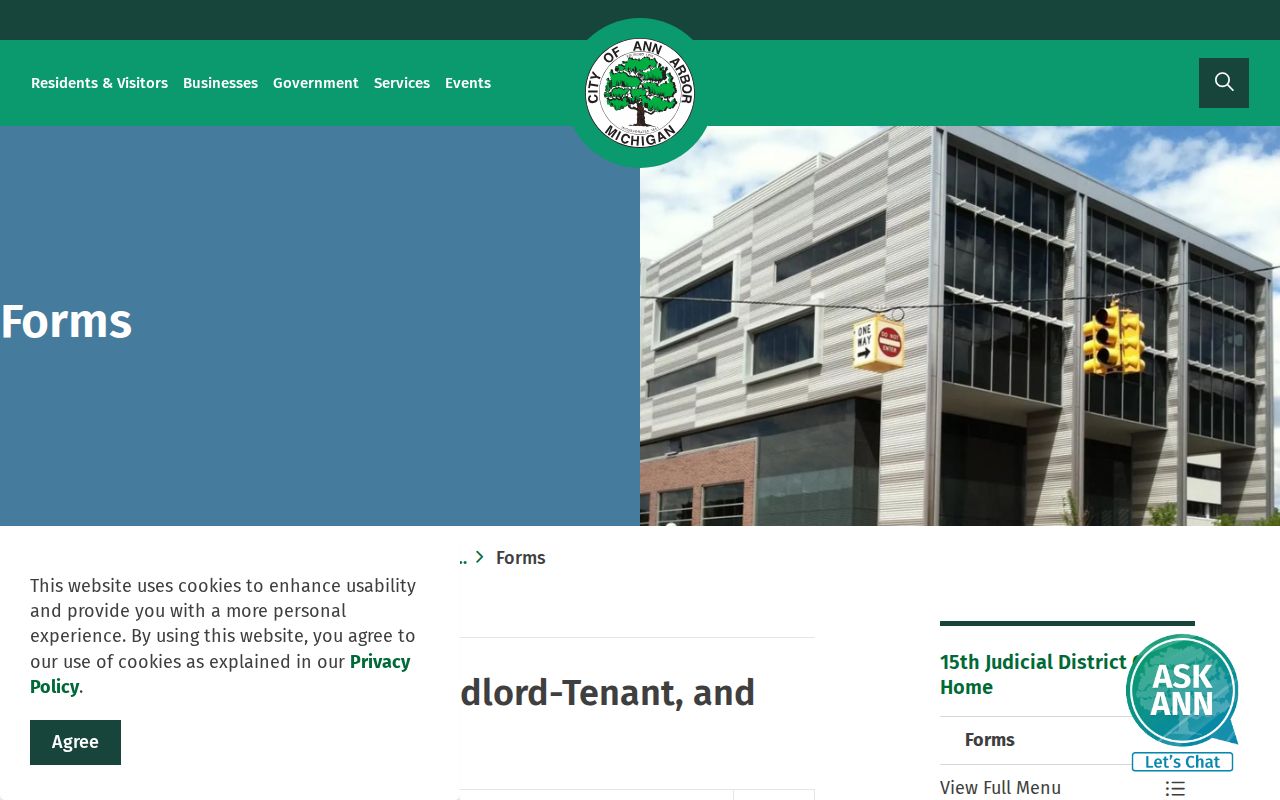
Washtenaw media requests sit apart from the ordinary copy counters and case-search tools. The county forms listing makes that split easy to see.
One proceeding-copy form matters here. Form 15 covers media copies of a proceeding and sets a $20 DVD fee. Only parties or their attorneys may request the DVD without a court order. Government identification is required. Once submitted, a request cannot be cancelled. The assigned judge must also give written permission before any duplication, alteration, publication, or public inspection of the recording.
Keep those limits in perspective. They attach to the proceeding-media form alone. They set no general rule for Washtenaw court records.
Washtenaw Court Records Public and Sealed Access
Michigan trial courts start from openness. Most records stay public unless a statute, court rule, administrative order, or specific court order says otherwise. Even so, Washtenaw public access does not put every attachment on display. Juvenile, adoption, protective, mental-health, name-change, and similar protected matters can be left out of public view. A case history may stay visible while one of its attachments sits redacted or restricted.
The Legislature's MCL 15.232 page spells out a wrinkle in the FOIA definition. Under that statute, the judiciary falls outside FOIA. So does a county clerk acting as clerk of the circuit court.
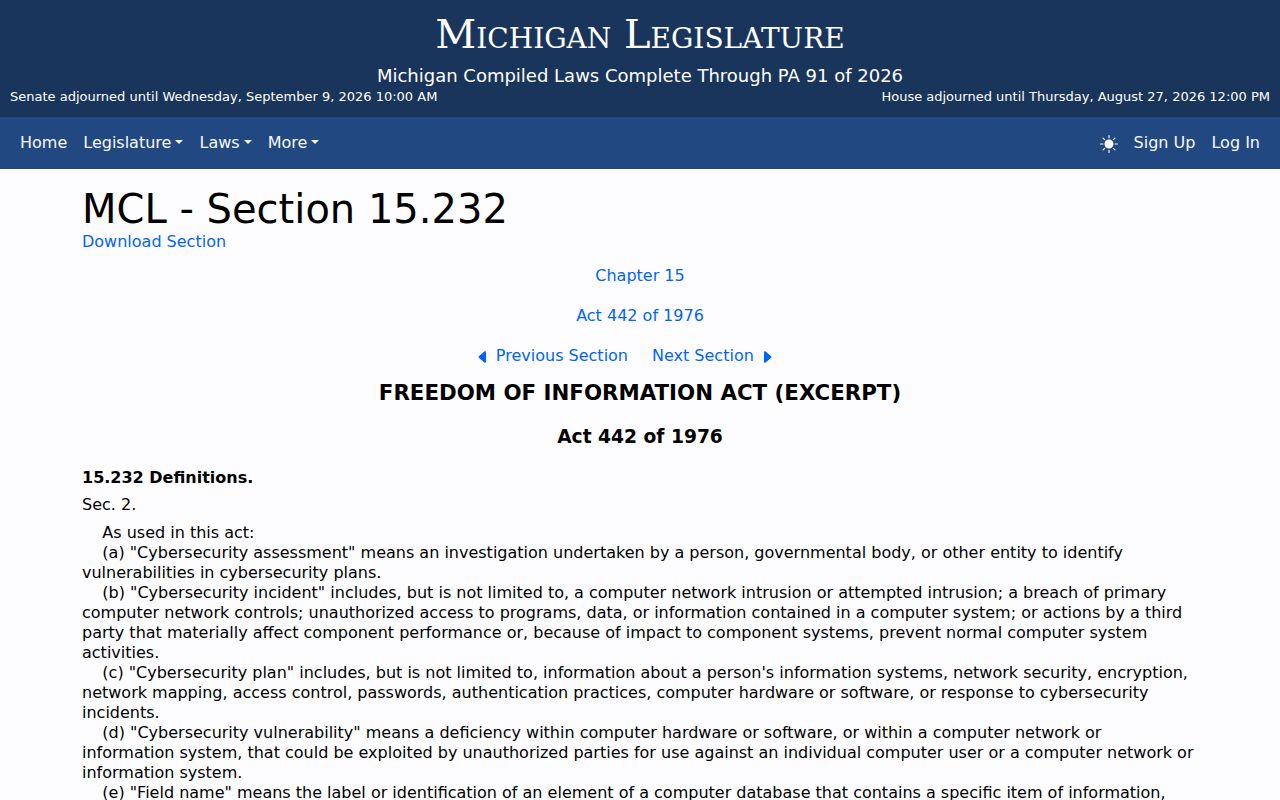
That exclusion has a practical result for requesters. A Washtenaw court-file request should go through the court's own clerk and access procedure rather than a standard county FOIA route.
Michigan court-record access rules. MCR 8.119 generally makes trial-court records public while allowing redaction and restrictions required by law or order. MCL 15.232 excludes the judiciary and circuit-court clerk from the ordinary FOIA definition. Request the record through the court that holds it.
Washtenaw Court Record Access Rules
Michigan Court Rules Chapter 8 gathers the current access and records rules in one place. MCR 8.119 sits among them. The framework allows public inspection and copying of court records while shielding personal identifiers and nonpublic material. There is a further privacy safeguard. When staff cannot produce a public record, Michigan's privacy policy calls for a careful response. It must not expose protected information just by confirming or denying its existence.
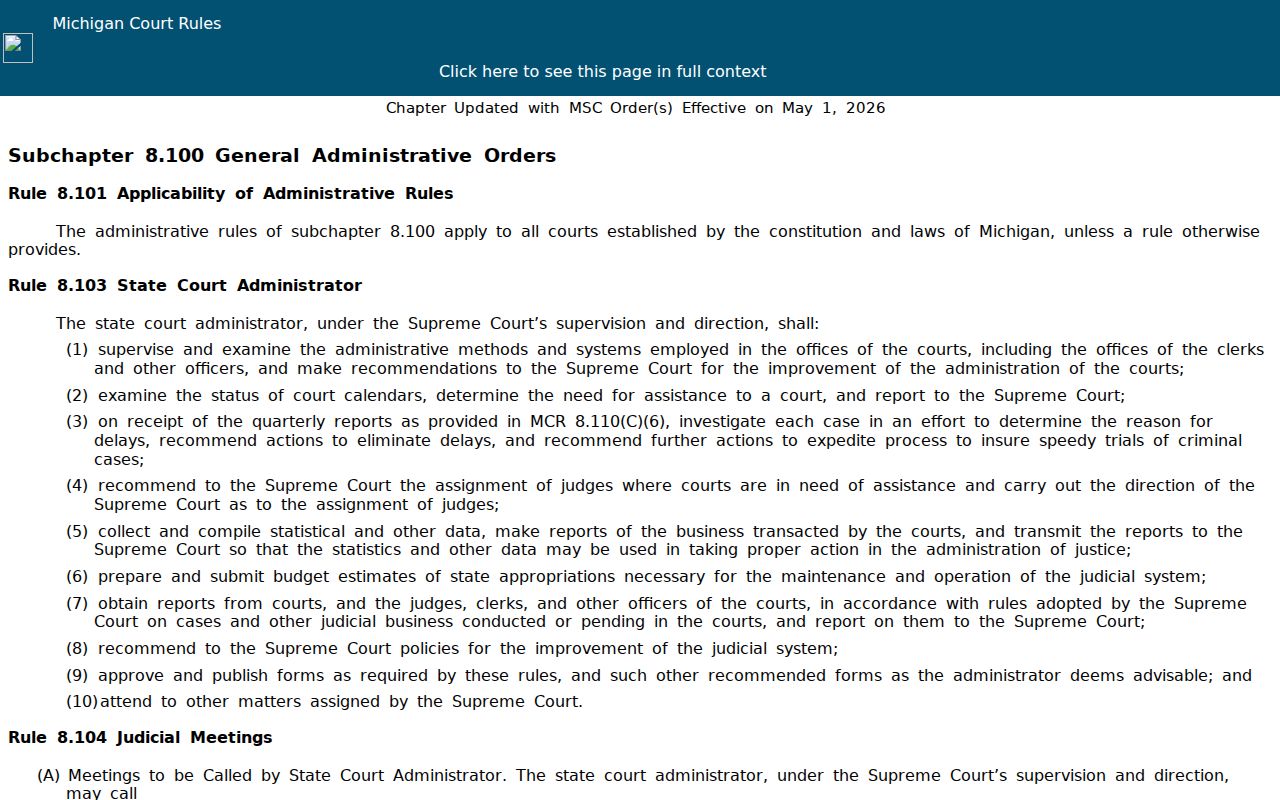
For Washtenaw court records, three things look alike but stay distinct under those rules. They are a searchable docket, a request to inspect a file, and access to a particular attachment.
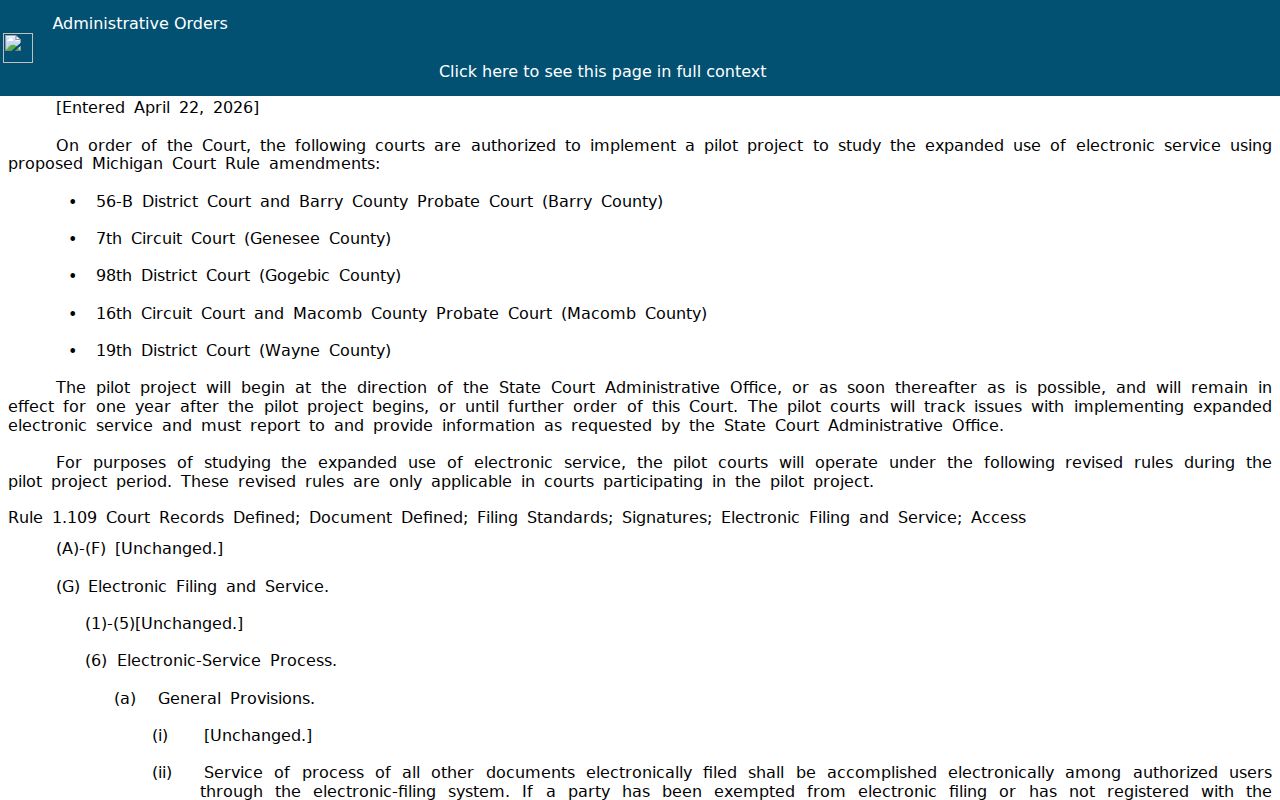
A recent order adds a possible point of confusion. The April 22, 2026 administrative order on expanded electronic service launches a statewide pilot. It is nothing more. Electronic service and public file access are different functions. So the order proves nothing about whether a given Washtenaw document image is open to the public.
Uncertainty calls for one simple step. When a Washtenaw electronic result, image, or delivery option is unclear, confirm the current records channel with the court of record.